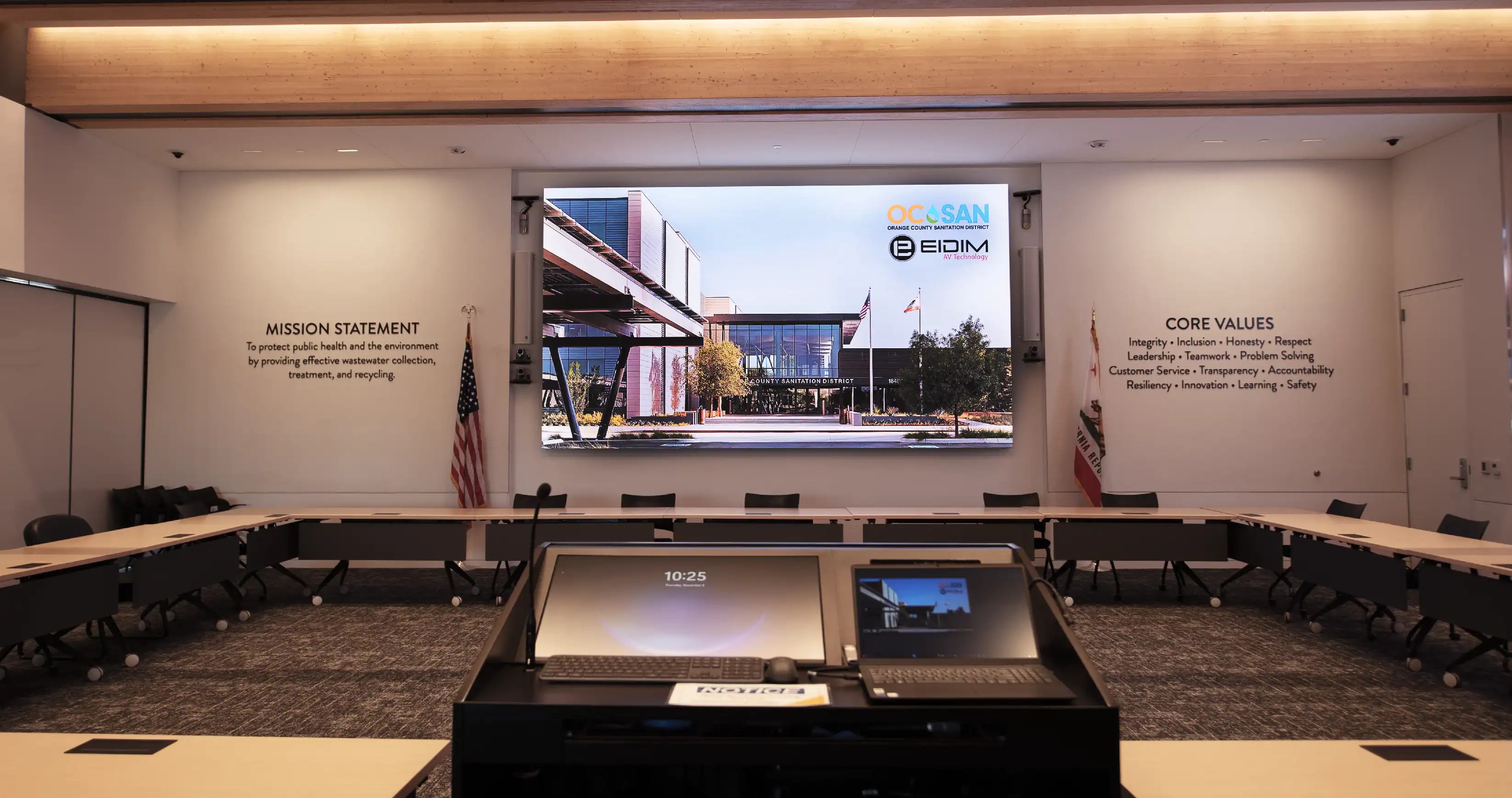
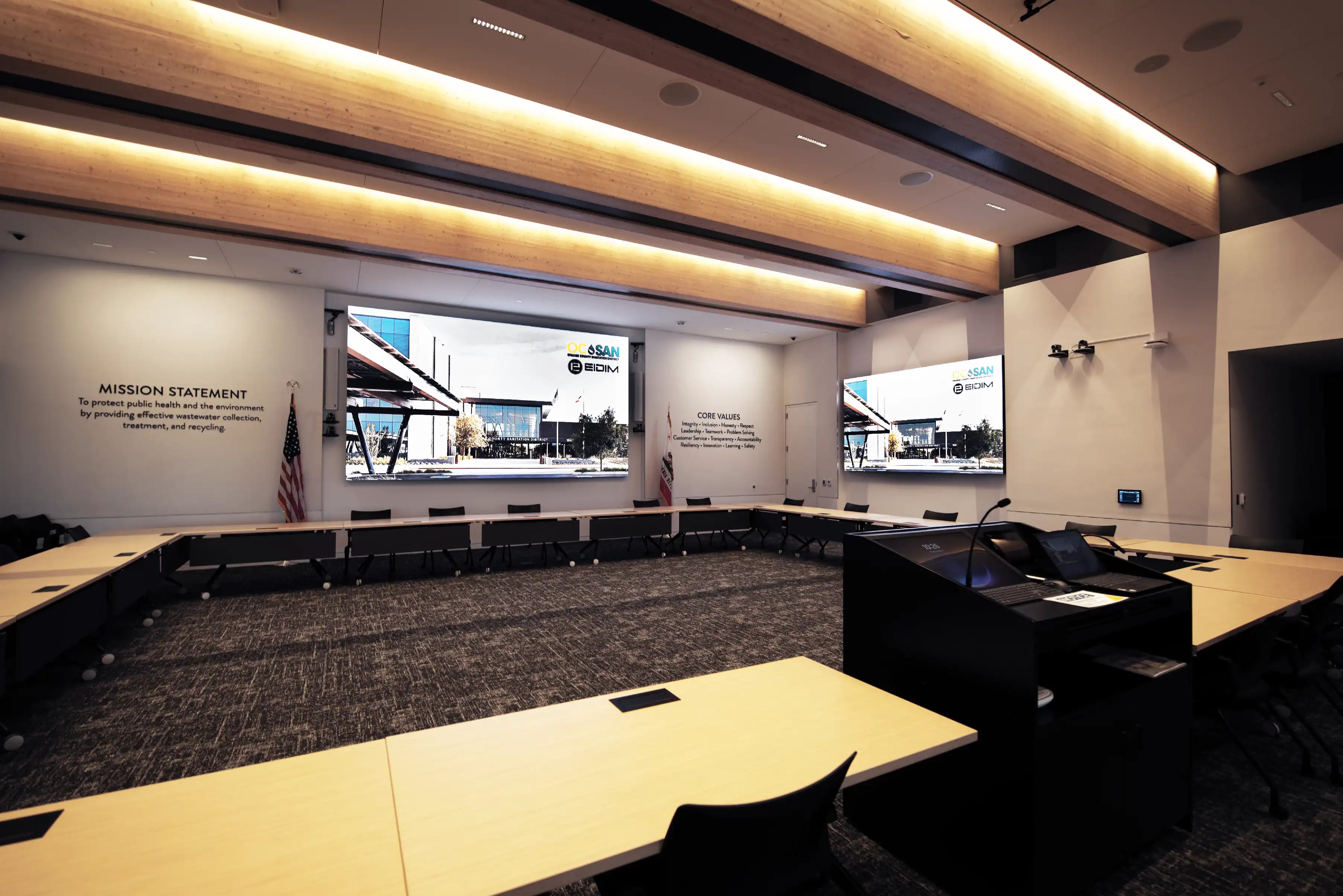
At the center of Orange County’s essential public operations, the OCSAN Headquarters serves as a hub where teams coordinate, plan and support the community’s daily needs. OCSAN’s commitment to a modern and dependable workplace ensures that each space functions as more than a meeting room, becoming an environment where communication, collaboration and informed decision making can thrive. The AV integration reinforces this mission and enhances the experience of every staff member who depends on clear information and seamless connection to perform their work.
Project Description
The Orange County Sanitation District Headquarters was designed as a modern, collaborative workplace, and its audiovisual systems needed to reflect the same level of purpose and sophistication. The new three level, 109,000 square foot building required technology that would connect staff, support public operations and allow teams to communicate clearly whether they were meeting in person or joining remotely.
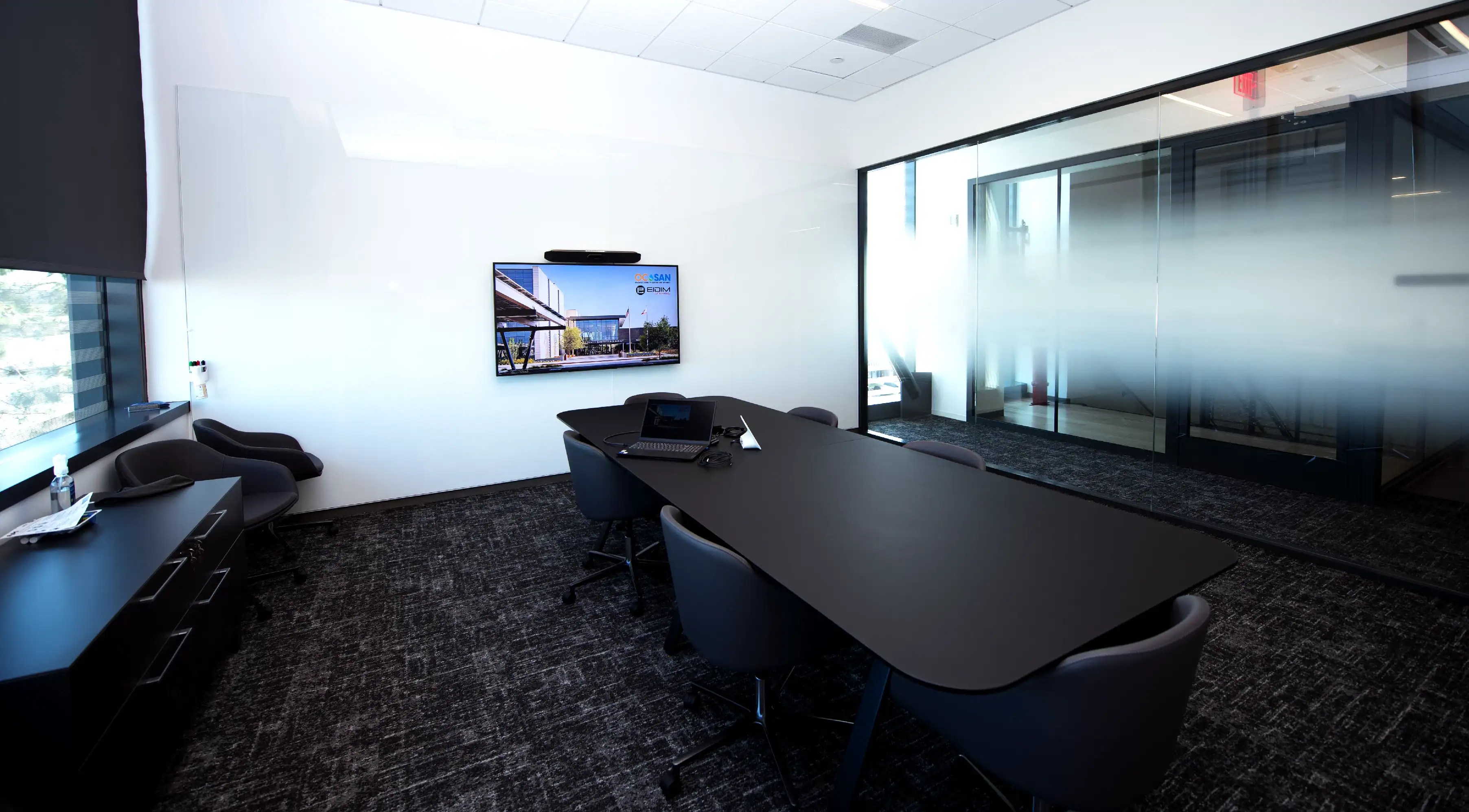
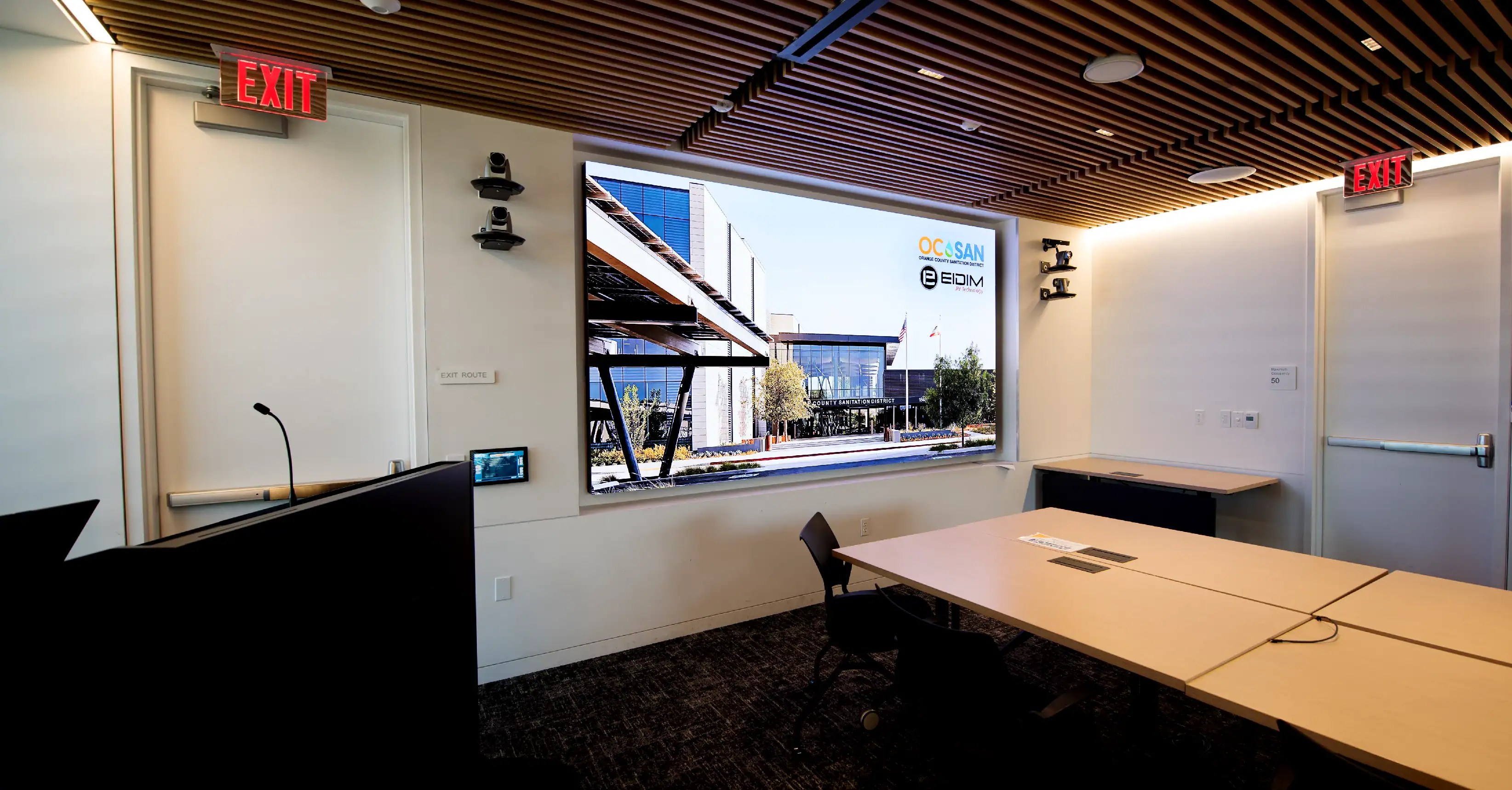
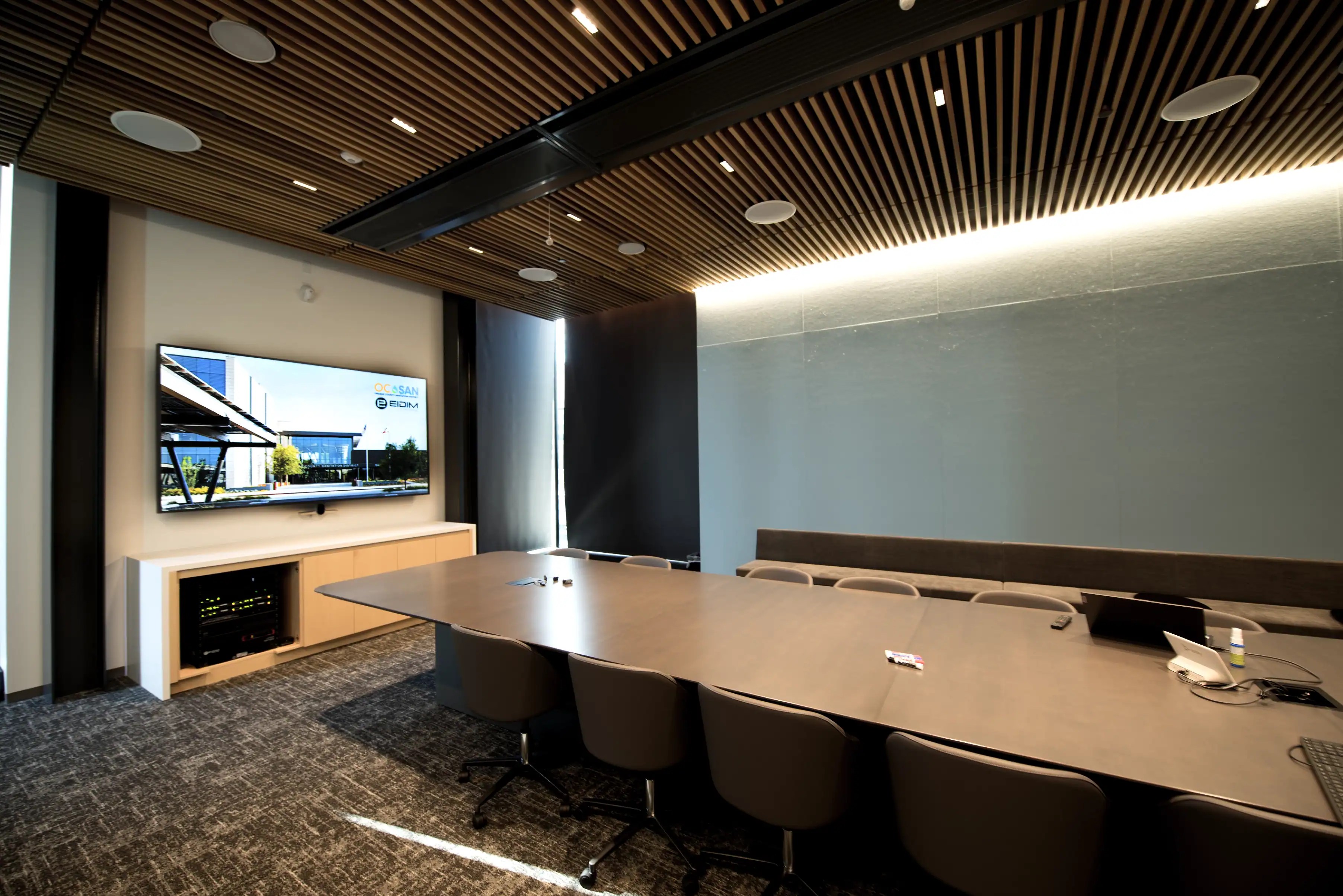
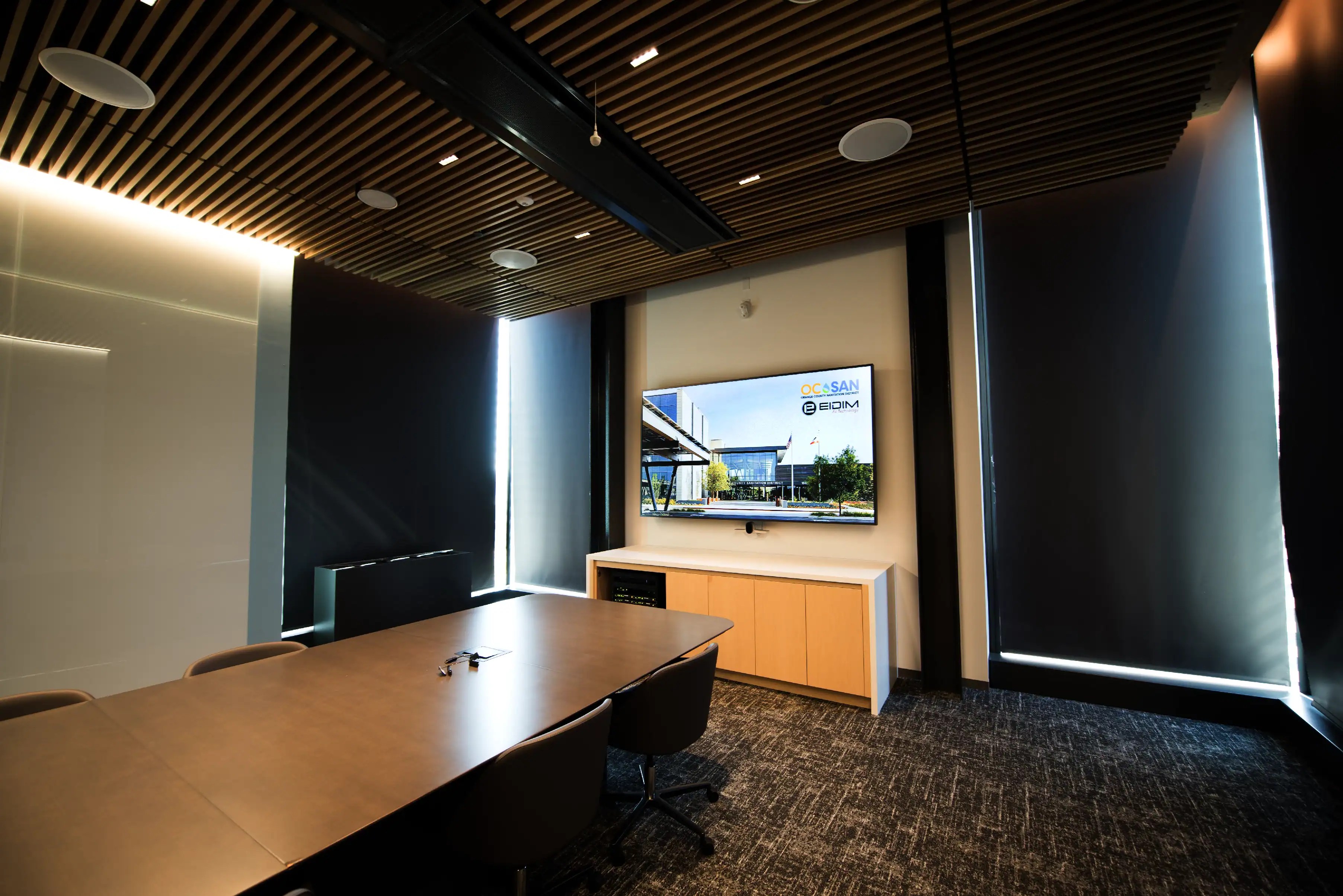
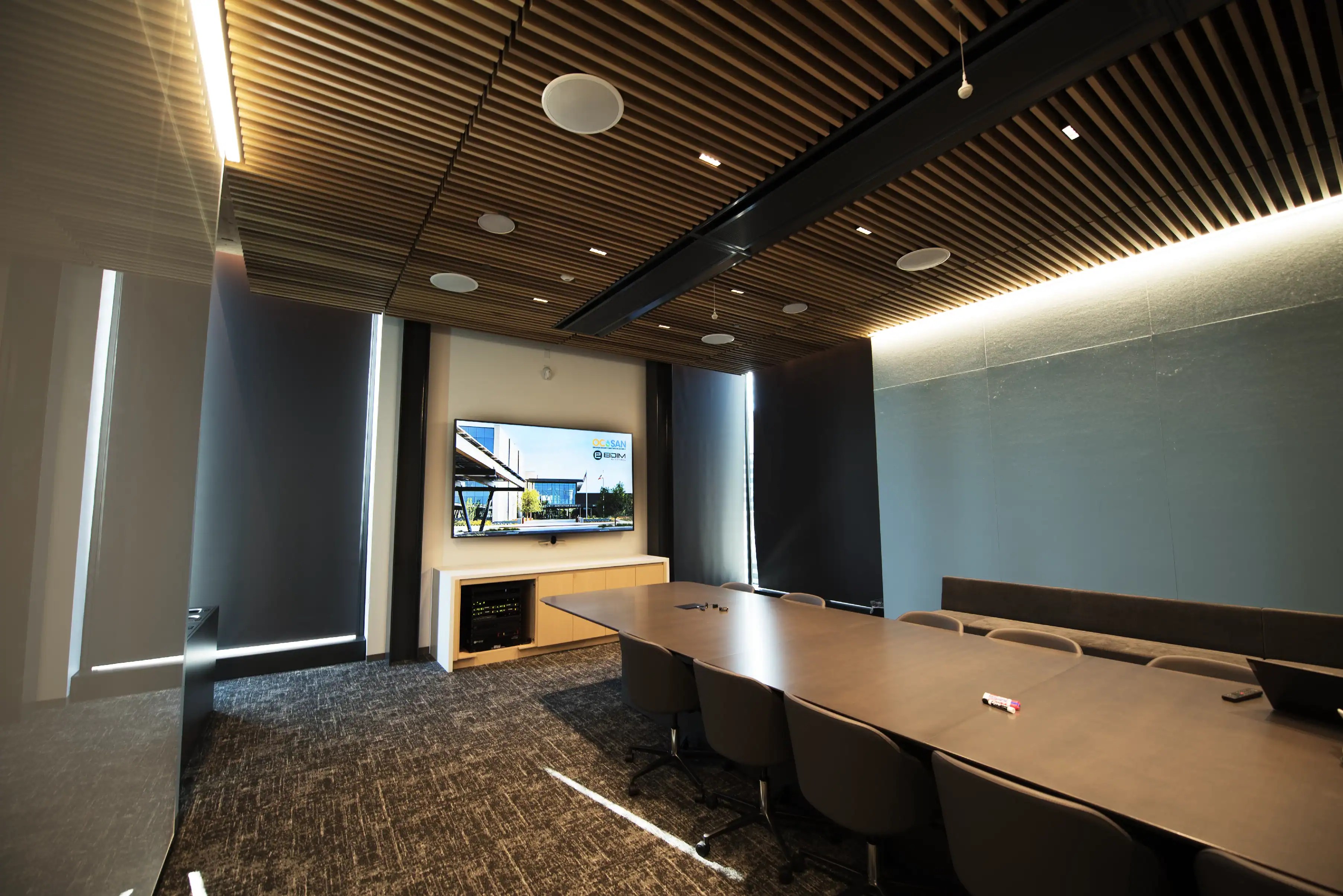
Our team entered the empty building while construction crews were putting on the final touches. Step by step, each room was transformed from a bare space into a fully functional communication environment. The integration work included installing microphones, cameras, commercial displays, DSP processors, encoders, decodersand control interfaces that all needed to operate together as one unified network. By the time the last device was commissioned, the building had evolved from a new structure into a connected operational hub ready to support the Orange County Sanitation District for years to come.
The Challenge
Integrating AV systems during the last stages of construction required careful coordination with electrical contractors, network teams and facility personnel. Pathways were still being completed, ceilings were being closed and cable routes often had to be adjusted quickly as field conditions changed. The AV systems also included Owner Furnished Contractor Installed equipment, which meant retrieving devices from OCSAN, transporting them safely and verifying each one matched the specifications before installation.
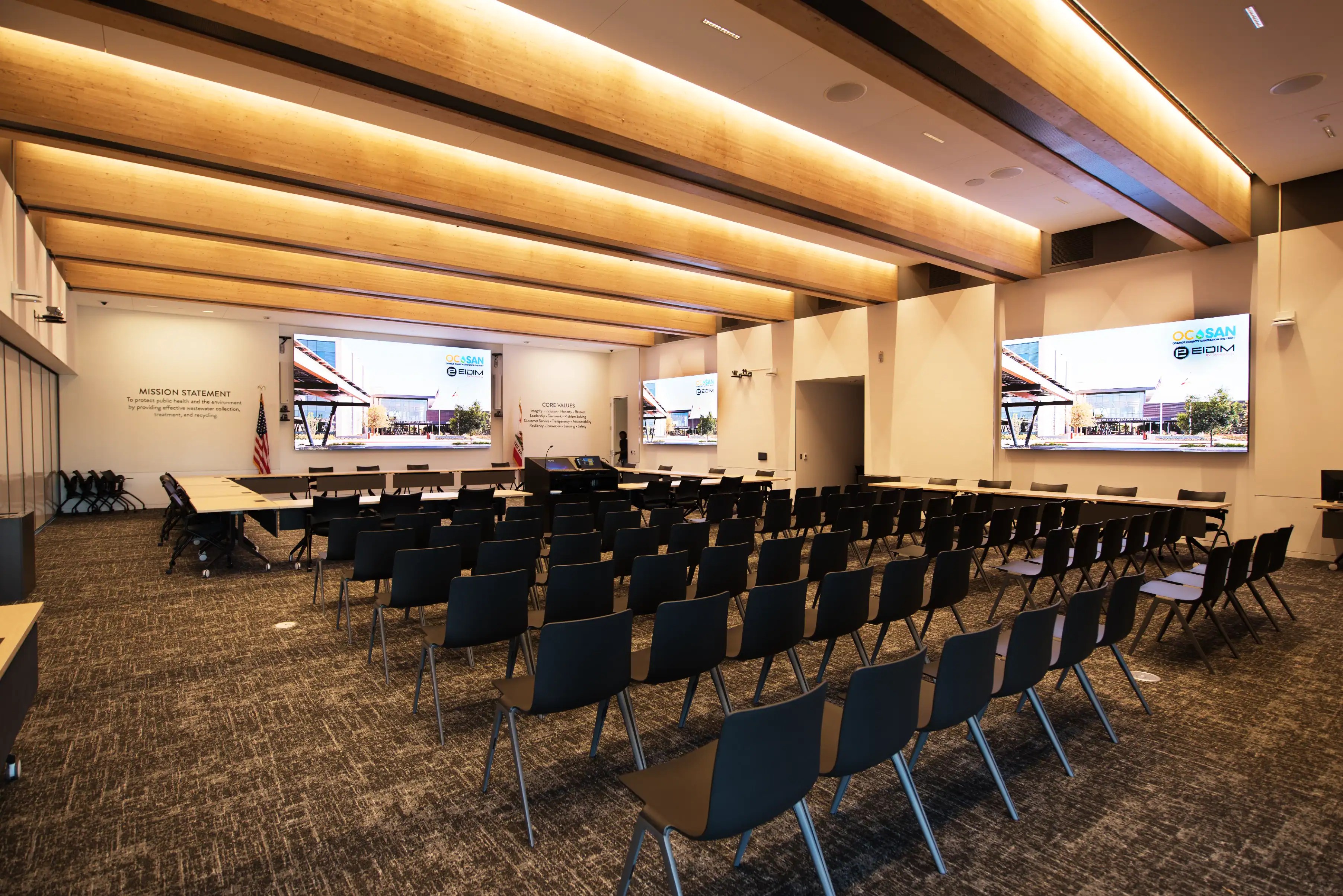
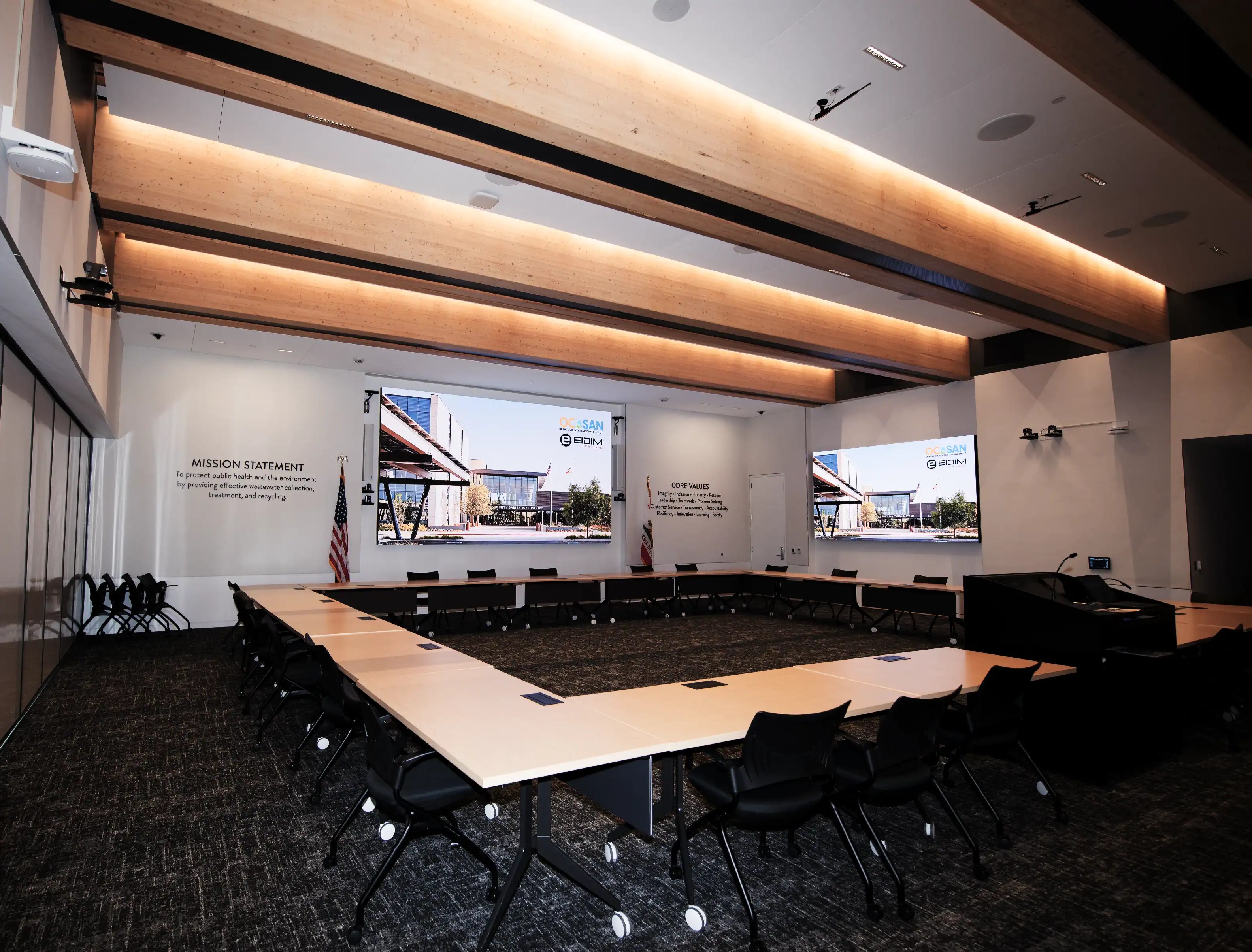
The variety of spaces included executive conference rooms, collaboration rooms, IT-driven AV closets, large meeting rooms and multipurpose areas. Each room had a different acoustic signature, seating layout and technical requirement, which demanded thoughtful tuning, programming and verification. Ensuring that all systems communicated correctly across the building’s network added another layer of complexity, requiring close collaboration with OCSAN’s IT team. Despite these challenges, the project moved forward smoothly and reached completion with systems that were clean, stable and intuitive for staff to use.
The OCSAN Headquarters AV Integration project equipped the OCSAN’s new three level administrative facility with upgraded conferencing systems, QSC Q-SYS audio processing, Shure ceiling and linear array microphones, Poly G7500 video conferencing codecs and network based video transport. These additions created a unified AV environment that delivers clearer communication, stronger audio pickup and seamless content sharing, resulting in a dependable technology ecosystem that supports smoother coordination and a better experience for staff as they carry out the OCSAN’s operational mission.
Technologies and Solutions Used
1. Microphones and Audio Capture
The building features Shure MXA910 ceiling array microphones, MXA710 linear array microphones and MXW wireless microphone systems. These provided strong voice pickup, clear dialogue and flexible support for hybrid meetings across executive and collaboration spaces.
2. Audio Processing and Room Tuning
QSC Q-SYS Core 110f processors served as the backbone of the audio environment. Paired with QSC ceiling speakers and network audio expanders, the system was programmed to handle echo reduction, room equalization and audio routing that matched the unique profile of each room.
3. Video Conferencing Platforms
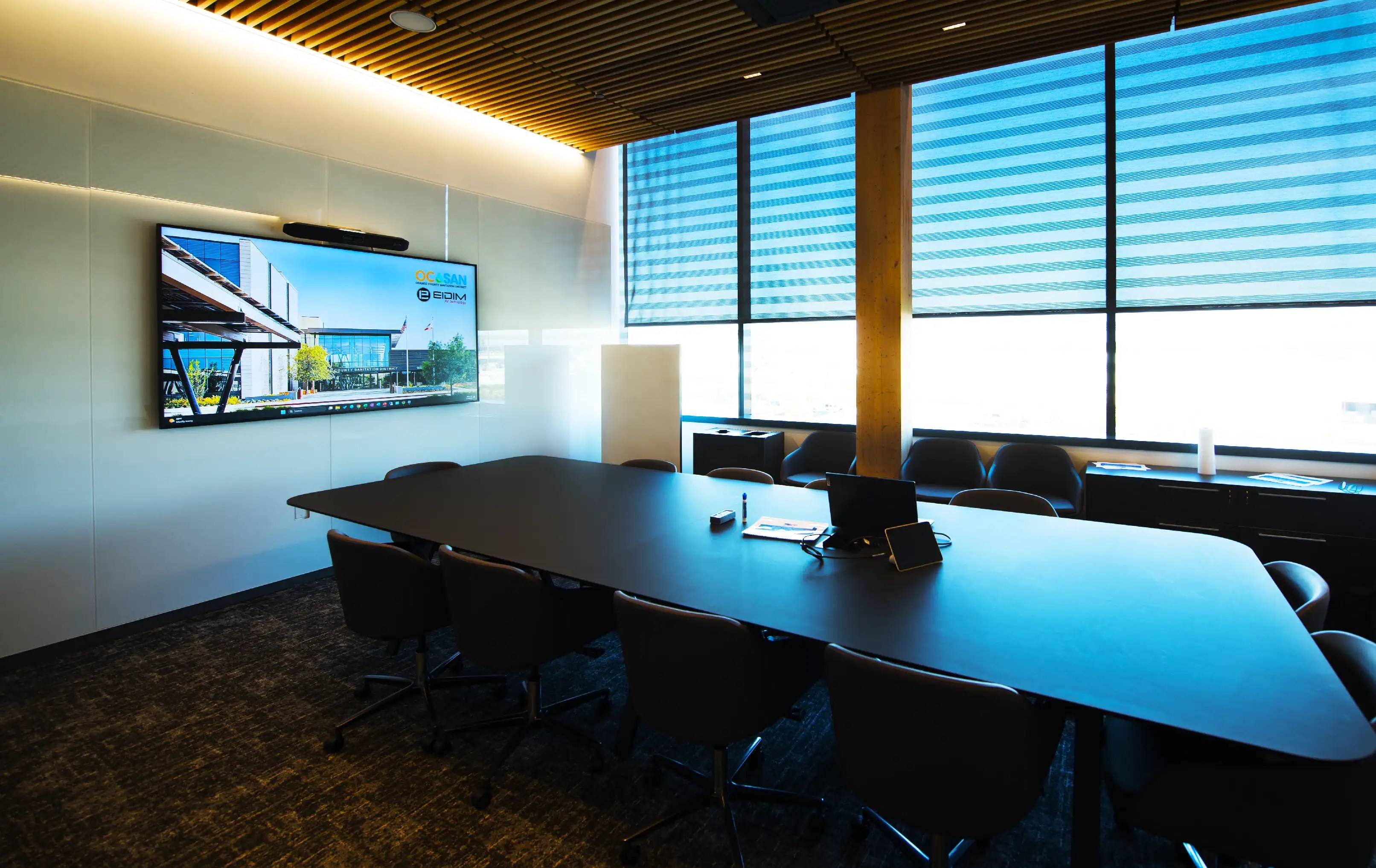
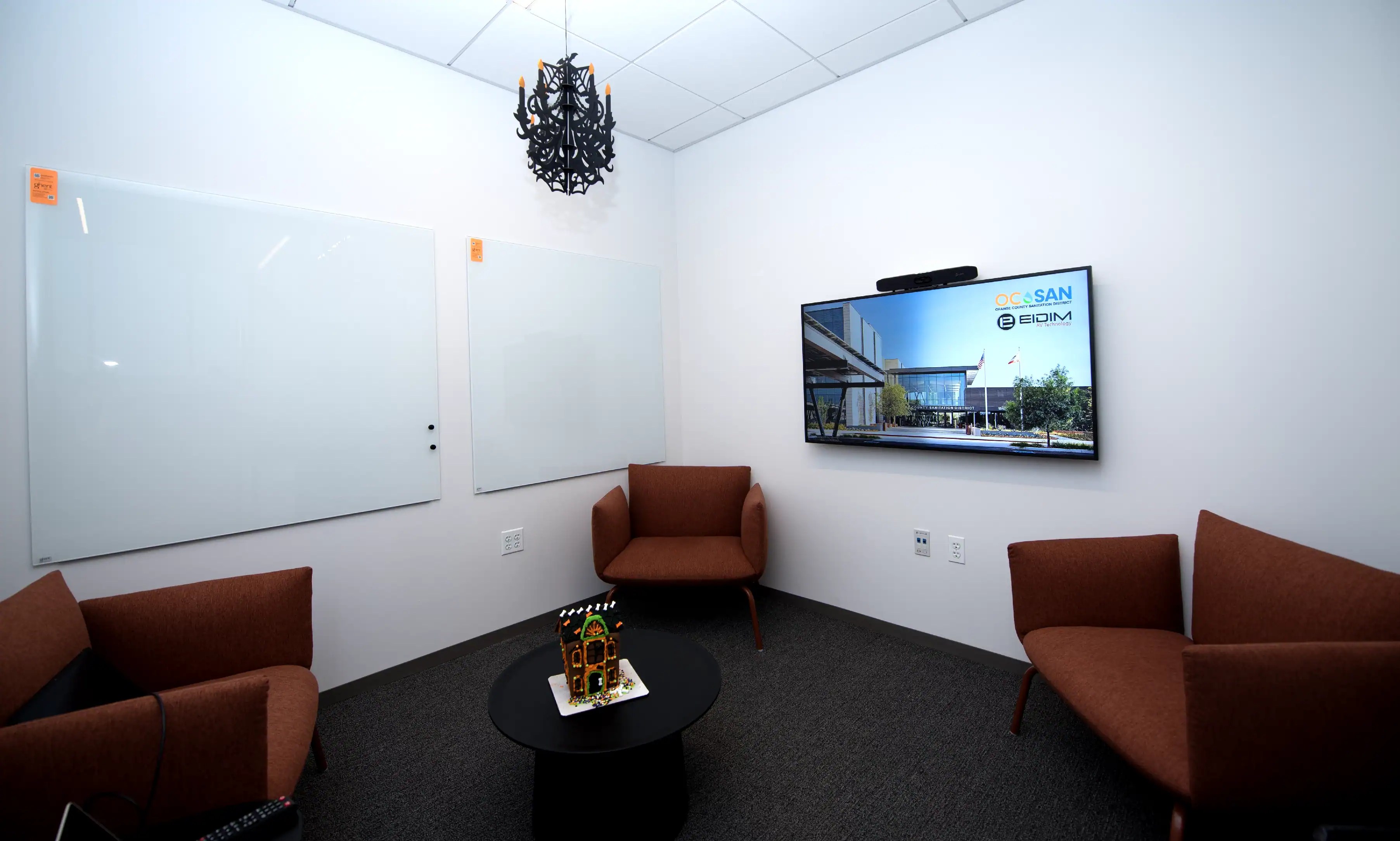
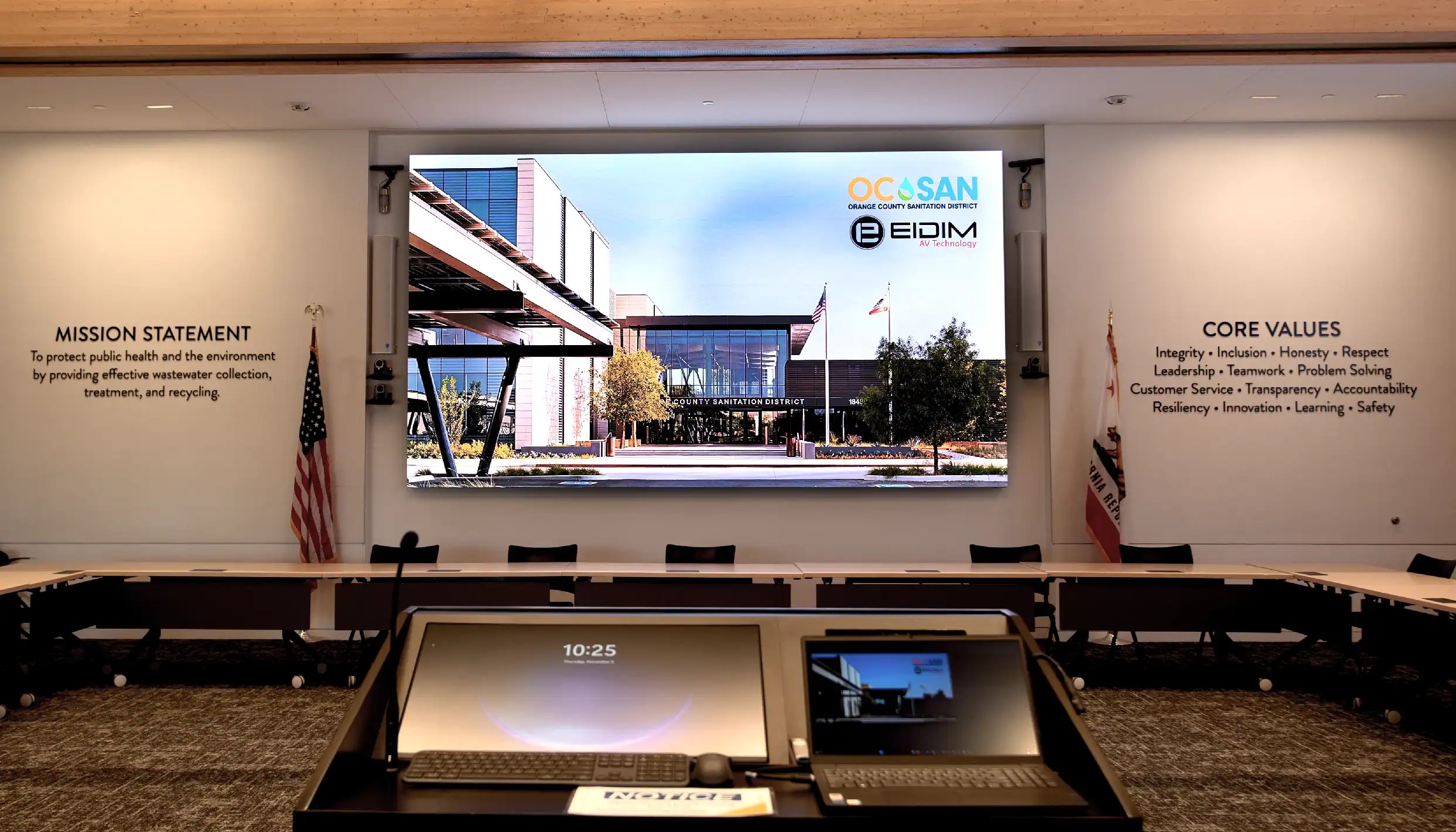
Poly G7500 codecs supported high quality conferencing in larger meeting rooms, while PTZ cameras and room cameras captured video with clarity for virtual attendees. These conferencing solutions allowed staff to participate in hybrid meetings without technical barriers.
4. Video Transport and Distribution
Video distribution was achieved using a network of AV encoders and decoders, including NAV TX and NAV RX systems documented in the BOM. These allowed content to move across the building with reliability, low latency and strong image quality. Each encoder and decoder was assigned and documented with static IPs to integrate cleanly with the network.
5. Displays and Presentation Systems
Samsung commercial displays were installed across conference rooms, offices and multipurpose spaces. Paired with QSC or Poly systems, these displays created consistent presentation environments. Every room supported HDMI and network based content sharing, giving staff the tools to present quickly and clearly.
Project Outcome
The completed OCSAN Headquarters now operates with a unified AV ecosystem that supports communication, collaboration and public service. Staff can join meetings with confidence, knowing that microphones capture their voice clearly, displays present their information with accuracy and conferencing systems seamlessly connect in person and remote participants. The centralized Q-SYS processing architecture and network based transport system give the Orange County Sanitation District long term reliability and flexibility. Maintenance and future upgrades can now be performed with minimal disruption, and rooms behave consistently across the entire building.
The project delivered more than equipment. It delivered a functional and dependable communication environment that will support the OCSAN’s operations for many years. This AV system now serves as an essential part of the agency’s daily workflow and strengthens the way the organization collaborates, plans and serves the community.